Best Artisan Belt Designs for Everyday Style
A belt can quietly make or break an outfit. The wrong one pinches, cracks, clashes with your shoes or disappears after a season. The best artisan belt designs do the opposite: they bring proportion, texture and personality to what you already wear, while giving you a piece made to stay in your wardrobe.
For people who care about how things look and how they are made, the difference is clear. An artisan belt is not simply a strip of material with a fastening. It is a considered object: chosen materials, skilled finishing, practical comfort and a design point of view that will still feel relevant years from now.
What makes the best artisan belt designs different?
The word “artisan” should mean more than decorative stitching. It points to attention where it counts: the hand feel of the strap, the quality of the edges, the way the buckle sits, and whether every component earns its place.
A well-designed belt should improve with wear rather than merely survive it. Vegetable-tanned leather, for example, develops a distinct patina over time. Natural grain becomes part of its character, rather than a flaw hidden under a heavy plastic coating. This makes each belt personal in a way mass-produced accessories rarely are.
Design matters just as much as material. A belt may be beautifully made, but if its buckle is too bulky under a shirt, its strap too stiff for daily movement, or its proportions wrong for your wardrobe, it will spend more time in a drawer than around your waist. The strongest designs balance visual impact with an easy, dependable fit.
1. Natural leather with a clean, considered finish
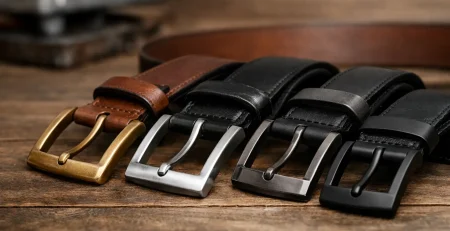
A classic leather belt remains one of the most useful accessories you can own, especially when the leather has been tanned and finished with longevity in mind. Look for a strap with visible natural character, neatly burnished edges and a thickness that feels substantial without becoming rigid.
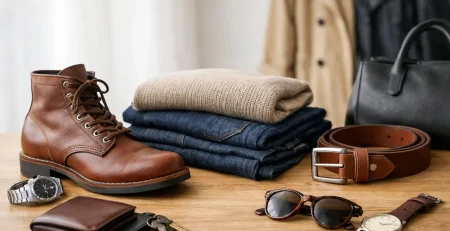
Black leather offers crisp contrast with tailoring, dark denim and monochrome outfits. Rich brown works especially well with indigo, olive, cream and textured wool. Tan is lighter and more relaxed, ideal for chinos, linen trousers and summer dressing. The best choice depends on your existing shoes and wardrobe, but a warm brown is often the most versatile place to start.
There is a trade-off. A highly polished belt can look sharp for formal events, but may feel too pristine with casual clothing. A more tactile, matte finish is easier to wear every day and tends to age more expressively. Choose the finish that reflects the life you actually lead, not only the occasion you imagine.
2. Statement buckles that do not shout
A distinctive buckle can transform a simple outfit, but good design does not need unnecessary shine or oversized hardware. The most wearable statement buckles are memorable because their shape, texture or material feels unexpected and intentional.
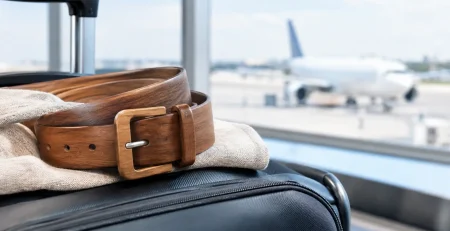
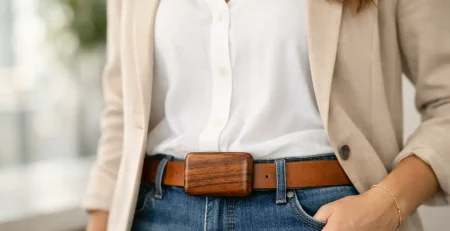
Wooden buckles are a striking example. Their natural grain gives every piece a subtle variation, creating visual warmth that metal cannot replicate. They can bring a sculptural edge to denim, workwear and minimal tailoring, while remaining refined enough for daily use.
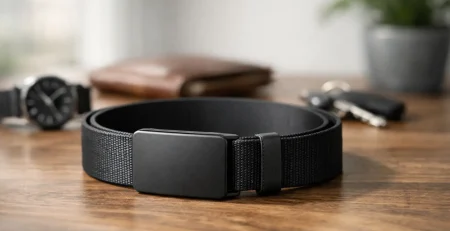
This choice also offers practical benefits. A metal-free buckle can be a welcome solution for anyone with metal sensitivities, while frequent travellers may appreciate an accessory designed without conventional metal hardware. It is a small shift in construction that can make getting dressed and moving through the day more comfortable.
Wood Belt has built its identity around this idea, pairing patented wooden buckles with premium straps to create belts that feel unmistakably individual. It is proof that innovation can be visible, useful and genuinely beautiful.
3. Slim designs for tailoring and lighter outfits
A slim belt has a particular kind of confidence. It defines the waist without interrupting the line of a dress, a high-waisted trouser or a softly cut blazer. For people who usually find standard belts too heavy or too masculine in proportion, a narrower strap can change the whole experience.
Choose a slim design when your outfit has fine details: delicate knitwear, pleated trousers, silk skirts or neatly cut suiting. A restrained buckle keeps the silhouette polished, while a contrast colour can add a considered focal point. Deep green, burgundy and cognac are especially effective alternatives to predictable black.
Do not assume slim means fragile. A narrow belt still needs durable materials and clean construction. The goal is visual lightness, not a disposable accessory that stretches after a few wears.
4. Wider belts for denim, utility and definition
Wider artisan belts are built for presence. They suit heavier denim, structured trousers, overshirts and layered autumn looks, where a slim strap can look lost. The additional width makes the belt feel grounded and gives the buckle more room to become part of the outfit.
This is where texture works particularly well. A rich leather grain, a matte buckle or a hand-finished surface adds depth to otherwise simple clothes. Think raw denim, a white tee and an overshirt: the belt can be the detail that turns a familiar uniform into something more deliberate.
Fit remains essential. A wider strap should slide smoothly through the belt loops without forcing the fabric to bunch. Check the width of the loops on the trousers you wear most often before choosing a bolder design.
5. Modular belts made for a longer life
One of the most thoughtful directions in artisan accessories is modular design. Rather than treating a belt as a single, fixed object, a modular approach allows components to be repaired, refreshed or paired differently over time.
A replaceable strap or interchangeable buckle means you can update the look without replacing the whole belt. It also makes practical sense: the strap and buckle do not always wear at the same pace. Keeping a well-made component in use is better for your wardrobe and lighter on resources than starting again every time a detail needs attention.
This is the real luxury of a buy-it-for-life mindset. It is not about owning one thing forever without change. It is about choosing pieces designed to adapt, be cared for and remain useful as your style evolves.
How to choose an artisan belt you will actually wear
Start with function. Consider whether you need a belt mainly for jeans, office tailoring, dresses or travel. One all-purpose belt can be a smart first purchase, but it is unrealistic to expect one width and one colour to suit every outfit. A compact collection of two or three excellent belts is often more useful than a pile of cheap options.
Then consider comfort. The belt should fasten without pulling at the waist or leaving you with excess strap that constantly gets in the way. If you sit for much of the day, natural materials that soften gently can make a meaningful difference. If you travel regularly or have sensitivity to metal, buckle construction deserves as much attention as appearance.
Finally, choose a design you genuinely enjoy seeing. Sustainable fashion should never ask you to compromise on style. The most responsible item is often the one you reach for repeatedly, care for properly and keep in circulation for years.
Caring for a belt with character
Artisan belts reward simple care. Keep leather away from prolonged heat and soakings, and let it dry naturally if caught in rain. Wipe dust away with a soft cloth, and use a suitable leather conditioner sparingly when the material begins to feel dry. Too much product can darken leather or leave a residue.
For wooden elements, avoid harsh cleaners and store the belt somewhere dry. Natural materials are meant to change gently over time, but they deserve to do so at their own pace. Rotate your belts, avoid folding them sharply, and hang or loosely coil them when not in use.
Choose a belt that makes getting dressed feel more intentional. Whether it is a beautifully ageing leather strap, a sculptural wooden buckle or a design made to be repaired rather than replaced, the right piece carries more than your outfit. It carries your standards.