Best Eco-Conscious Leather Goods That Last
A beautiful leather accessory should earn its place in your wardrobe, not demand to be replaced next season. The best eco-conscious leather goods pair a considered material story with exceptional design, real comfort and the kind of durability that makes daily use feel better over time. That means looking beyond a soft finish or a reassuring green label.
Leather is complicated, and that is precisely why informed choices matter. A well-made leather belt, bag or small accessory can stay in rotation for decades. But leather can also carry a high environmental footprint when sourcing, tanning, dyes and production are treated as afterthoughts. The goal is not to chase perfection. It is to choose fewer pieces with a clear purpose, a longer life and materials that have been handled with care.
What Makes Leather Goods Eco-Conscious?
“Eco-conscious” is not a single material certificate. It is the sum of decisions behind an object: where the leather comes from, how it is tanned, whether the design can be repaired, and whether you will still want to wear it in five or ten years.
The strongest pieces begin with leather that is a by-product of the food industry, rather than material sourced solely for fashion. This does not erase leather’s impact, but it makes use of an existing resource. Responsible makers should also be able to speak clearly about their supply chain, rather than relying on vague claims about being “natural”.
Tanning deserves attention too. Conventional chrome tanning is widespread because it is fast and economical, yet it can involve chemicals that require careful management. Vegetable-tanned leather uses tannins derived from plant matter, such as bark and leaves. It generally takes longer to produce, develops a rich patina with wear and can be a thoughtful choice when the tannery manages water, waste and worker safety responsibly.
Still, vegetable tanning is not an automatic sustainability stamp. Leather is a resource-intensive material, and every tannery has different practices. Transparency, longevity and responsible finishing matter just as much as the tanning method itself.
The Best Eco-Conscious Leather Goods Start With Longevity
The most sustainable accessory is often the one you keep using. A belt that works with denim, tailoring and a favourite dress has far more value than three trend-led alternatives that crack, stretch or lose their appeal within a year.
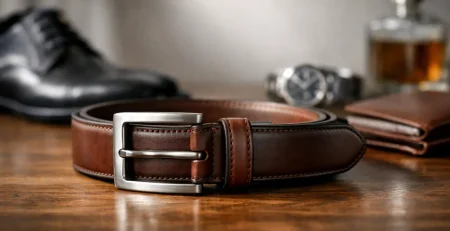
Look closely at construction. Full-grain or top-grain leather tends to retain more of the hide’s natural strength than heavily corrected leather. Finished edges should feel smooth and secure, stitching should be even, and the hardware or fastening should be designed for repeated use. A piece does not need to look overly rugged to be durable. It simply needs to be made with intention.
Design plays an equally powerful role. A recognisable silhouette can outlast a passing trend when it still feels like you. Choose colours you genuinely wear, proportions that suit your everyday life, and details that offer a point of view without limiting your styling options. Great design is not disposable. It becomes part of your signature.
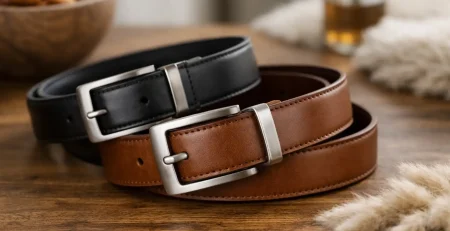
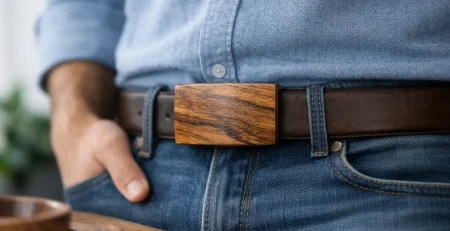
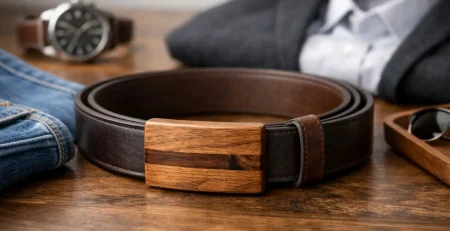
For belts, consider the components as well as the strap. A buckle that is easy to maintain or a modular system that allows a worn strap to be replaced can keep the accessory in use rather than sending the whole item to waste. Wood Belt’s patented wooden buckle approach brings a distinctive, metal-free alternative to a category that rarely changes, pairing natural material character with a practical benefit for travellers and people sensitive to metal.
Materials That Deserve a Closer Look
Leather’s story does not end at the hide. Linings, buckles, coatings, packaging and adhesives all affect the final footprint of a product. A premium accessory should feel considered from every angle, not merely photogenic from the front.
Natural, lower-impact elements can make a meaningful difference. Reclaimed wood offcuts, responsibly sourced wood, vegetable-tanned leather and minimal, recyclable packaging are all positive signals when they are backed by thoughtful construction. Used wood offcuts, for example, give material already in circulation a fresh purpose while adding grain, warmth and individuality that synthetic components cannot imitate.
Be wary of language that hides more than it reveals. Terms such as “vegan leather” cover a broad range of materials, including plastic-based options that may not age well or be easy to recycle. Innovative plant-based alternatives can have a place, particularly where leather is not suitable for someone’s needs, but they should be judged on durability, coatings and end-of-life options rather than branding alone.
Likewise, “biodegradable” needs context. A leather piece with plastic-heavy coatings, synthetic backing or permanent mixed-material construction may not break down as the label suggests. The better question is simple: what is this made of, how long will it last, and what happens when it is finally worn out?
How to Shop With Better Questions
You do not need an environmental science degree to buy with more confidence. Ask a brand where its leather is sourced and tanned, what it can share about manufacturing, and whether it offers care, repairs or replacement parts. A clear answer is a good sign. Evasive language is useful information too.
Before buying, picture the item after 100 wears. Will the leather soften and gain character? Can the closure be adjusted? Is the shape practical enough for your routine? Does it work with what you already own? These questions protect you from impulse buying while leading you towards pieces with real staying power.
Price matters, but cost per wear is often the more honest measure. A well-crafted belt worn twice a week for years can offer better value than a cheaper version replaced again and again. That does not mean every responsible purchase must be expensive. It means paying for material quality, skilled workmanship and a design you will continue to choose.
Care Is Part of the Impact
The most elegant way to reduce the footprint of leather is to extend its useful life. Keep accessories away from prolonged direct heat, wipe away surface dirt with a soft dry cloth, and store bags filled lightly so they hold their shape. Leather conditioners can help when used sparingly and according to the maker’s advice, but over-conditioning may darken or soften the material too much.
For belts, rotate your favourites rather than wearing one relentlessly, especially if it is exposed to rain, body oils or frequent bending. Let wet leather dry naturally at room temperature. A radiator may seem convenient, but quick heat can leave leather stiff, brittle or misshapen.
Small repairs are worth making. Restitching, edge refinishing, replacing a strap or repairing a closure can preserve an accessory with history and character. This is where thoughtful, modular design proves its value: a minor issue should not make an otherwise excellent piece obsolete.
Choose Character Over Constant Replacement
Eco-conscious leather is not about finding a flawless material or building a wardrobe around guilt. It is about choosing objects that respect resources because they are designed to be kept. The right leather goods will carry the marks of your life – a softened handle, a deepened tone, a gentle patina – and look more personal because of them.
Choose the piece that feels unmistakably yours, ask what it is made from, and give it the care it deserves. When an accessory is crafted for the long haul and loved for just as long, style becomes a quieter, more meaningful kind of impact.