Best Non Metal Belt Buckles for Everyday Style
A belt buckle sits at the centre of an outfit more often than people realise. It catches the light, breaks up a silhouette and can turn a considered look into something that feels overly industrial. The best non metal belt buckles offer a different proposition: comfort against the body, a distinctive finish and materials that feel more aligned with a thoughtful wardrobe.
For those who wear belts daily, travel often or react to metal against their skin, the choice is more than aesthetic. A well-made alternative buckle can remove a small but persistent irritation from getting dressed, while bringing genuine character to denim, tailoring and everything between.
What makes the best non metal belt buckles?
The answer depends on how and where you wear your belt. A lightweight synthetic buckle may suit sport or wet weather. A plant-based composite can make sense for a casual belt. But if you want an accessory with visual warmth, durability and a more elevated presence, the material and construction deserve closer attention.
The strongest non-metal buckles do three things well. They hold securely without feeling bulky, sit comfortably when you are seated, and look intentional rather than like a workaround for metal. They should also work with a strap that has enough substance to keep its shape over time. A beautiful buckle on a thin, disposable strap is not a buy-it-for-life solution.
Good design matters here. The buckle should feel proportionate to the belt width and to the clothes you wear most. A chunky buckle can be excellent with relaxed denim or utility trousers, while a cleaner profile is easier under knitwear and with smart-casual tailoring.
Wooden buckles: natural material, visible difference
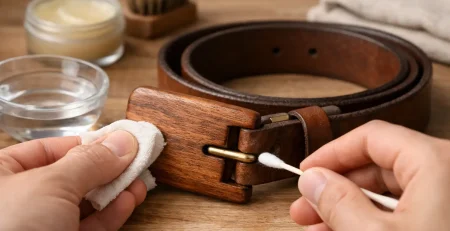
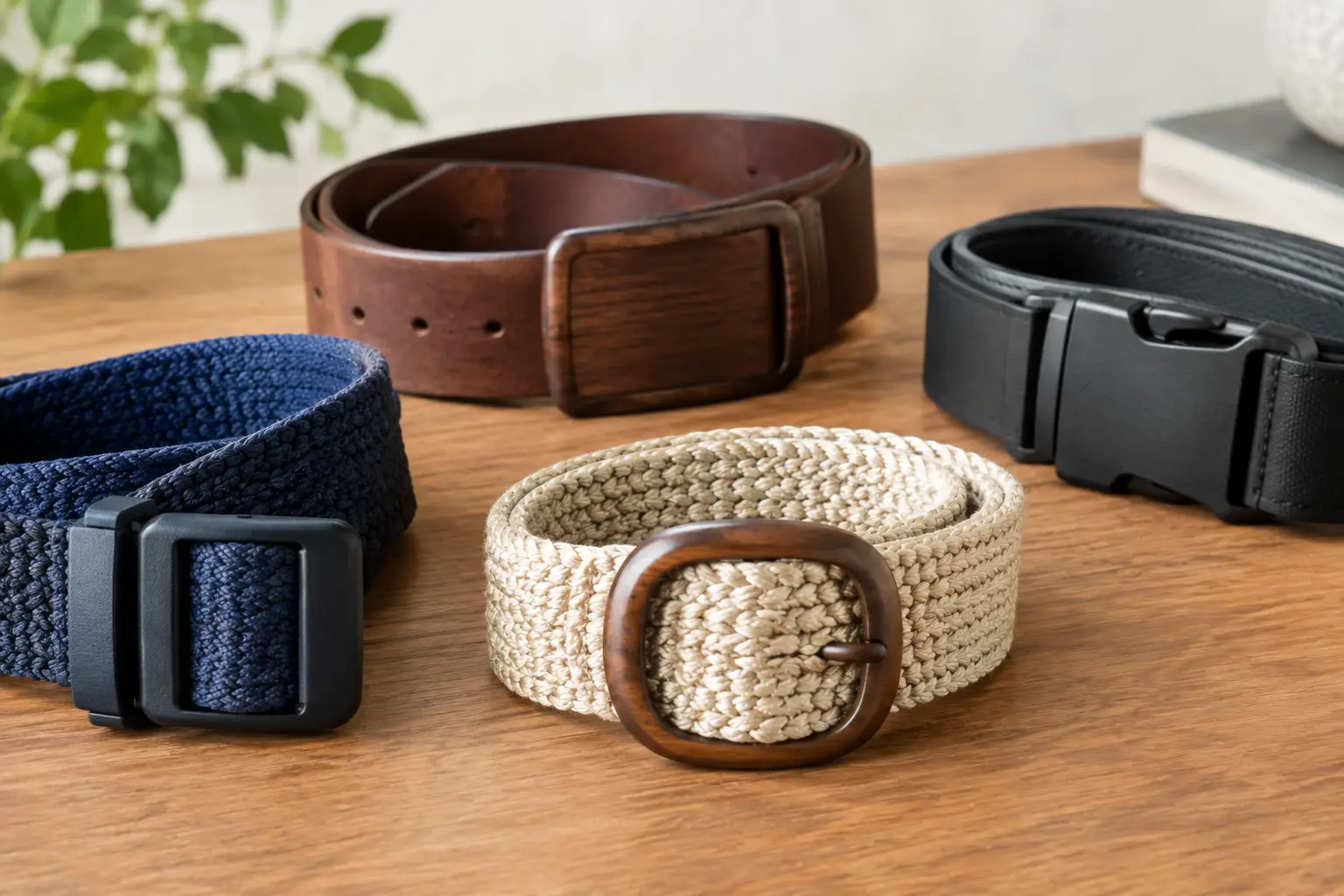
Wood is one of the most compelling materials in this category because it does not try to imitate metal. It brings grain, tone and texture that are entirely its own. Each buckle can show subtle variation, making a simple belt feel personal rather than mass-produced.
A properly engineered wooden buckle is not a novelty. The quality lies in the shaping, finishing and the way the fastening system distributes pressure through the piece. Well-selected and carefully finished wood can be light in hand yet reassuringly strong in everyday use. It also avoids the cold touch of metal, which is a small pleasure on early mornings and a practical benefit for sensitive skin.
There is an environmental case, too, but it is worth being discerning. Wood sourced from offcuts or reclaimed material gives existing resources a second purpose. That is more meaningful than treating sustainability as a surface-level label. Paired with vegetable-tanned leather or another durable strap material, a wooden buckle supports a slower approach to accessories: fewer pieces, better chosen, worn more often.
Wood Belt has built its signature around patented wooden buckles made with this principle in mind – iconic design that feels good to wear and has a reason to exist.
The trade-off with wood
Wood rewards sensible care. Like any natural material, it should not be left soaking wet or stored beside intense heat for long periods. That is not a drawback unique to wood; leather also benefits from considered care. For most daily wear, simply keeping the belt dry after rain and giving it a quick wipe when needed is enough.
If your routine involves open-water sports, constant heavy rain or industrial work, a technical polymer buckle may be the more practical choice. For city life, travel, work and weekends, a quality wooden buckle offers a rare balance of ease and refinement.
Polymer and composite buckles: practical, but not all equal
Plastic, resin and composite buckles are often the first non-metal options people encounter. They can be remarkably light, water-resistant and economical. For hiking belts, children’s clothing and performance gear, that practicality has a place.
The question is whether the buckle suits the rest of your wardrobe. Many moulded buckles have a functional, outdoorsy appearance that can feel out of place with a crisp shirt, wool trousers or a well-cut pair of jeans. They can also scratch, fade or become brittle depending on the resin, exposure to sunlight and quality of manufacture.
Sustainability is equally variable. A buckle being metal-free does not automatically make it low impact. Virgin plastic is still fossil-fuel based, and mixed-material components can be hard to repair or recycle. Recycled polymers are a stronger option where performance is the priority, particularly when the design allows the belt to be repaired rather than discarded.
Leather, cork and other natural alternatives
Some belts use leather-covered or leather-based fastening details to avoid a conventional metal buckle. These can look understated and work beautifully for occasional wear, but the fastening must be tested honestly. Leather stretches, especially where it is repeatedly pulled through a loop or slot, and a weak closure soon undermines an otherwise premium piece.
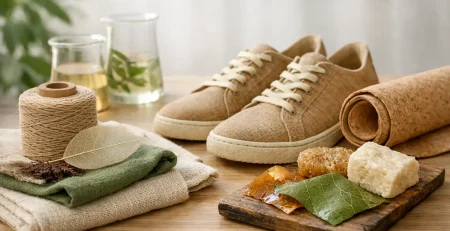
Cork is light and visually interesting, with a naturally soft character. It is usually better suited to accent details than to the load-bearing core of a buckle. Bio-based composites can be promising too, but terms such as “plant-based” need context. Check what proportion is actually renewable, how long the buckle is designed to last and whether the belt can be repaired when one part wears out.
The most responsible option is rarely the newest-looking material. It is the one that performs well, is made with care and earns years of use.
Comfort for metal sensitivities
For people with nickel sensitivity or general discomfort around metal, a non-metal buckle can make wearing a belt feel uncomplicated again. The issue is not always obvious at first. Skin irritation can develop where a buckle touches the body through a thin top, during warm weather or after long days spent sitting.
A metal-free buckle removes that contact point. Still, inspect the whole belt rather than assuming every detail is non-metal. Rivets, hidden reinforcements, adjustment hardware and detachable fittings may also contain metal. If sensitivity is a key reason for shopping, choose a design that is explicit about its materials and construction.
Comfort also comes from weight. A lighter buckle pulls less at the waistband and is less likely to dig in when you sit, drive or move through a long day. This is especially noticeable with high-waisted trousers, dresses cinched at the waist and softer fabrics.
Travelling with a non-metal buckle
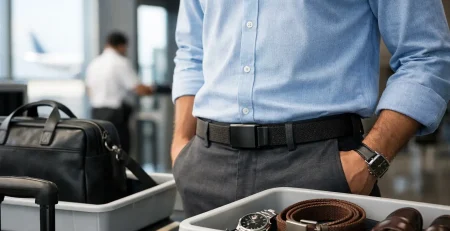
Non-metal buckles are a smart companion for frequent travellers, but they are not a guaranteed shortcut through airport security. Screening procedures vary by airport, country and equipment, and security staff always have the final say. It is sensible to follow local instructions and allow time as normal.
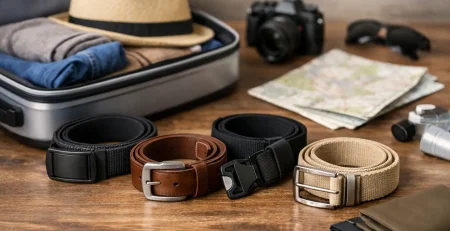
That said, a belt without a conventional metal buckle removes one common reason belts trigger attention. It also makes packing more pleasant: a lightweight belt takes up little room and works across multiple outfits. Choose a versatile tone, such as deep brown, black or natural wood, and it can move easily from travel day to dinner reservations.
How to choose a buckle that you will keep wearing
Start with your usual clothes, not an imagined version of your wardrobe. If you live in dark denim and boots, a richer wood tone with a defined shape may feel right. If your style is clean and pared back, look for a slimmer profile and a smooth, restrained finish.
Then assess the belt as a modular object. Can the strap be replaced if it eventually wears? Is the buckle designed to stay useful beyond one season? Are the materials clearly described? Repairability matters because belts fail at different points. A replaceable strap can extend the life of a favourite buckle, while a removable buckle gives you more freedom to refresh your look without buying an entirely new accessory.
Finally, trust how it feels. The best belt is not the one you save for special occasions. It is the one that makes an ordinary outfit look sharper, sits comfortably from morning to night and still feels like your style years later.
Choose a buckle with a story you are proud to wear, then give it the care and repeat wear that turns a good purchase into a personal staple.