A Guide to Modular Accessory Design That Lasts
A belt should not become waste because one part wears out, your style changes, or a buckle no longer suits the occasion. That simple frustration sits at the heart of a guide to modular accessory design: creating accessories as thoughtful systems of interchangeable, repairable parts rather than short-lived, sealed products.
For people who buy with intention, modularity is not a gimmick. It is a better relationship with the things you wear. One well-made base can take on a new character, fit a changing wardrobe and remain useful long after a conventional accessory would have been replaced.
What modular accessory design really means
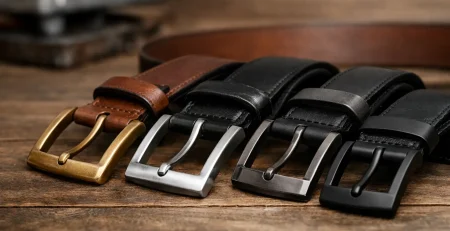
Modular design separates an accessory into components that can be changed, maintained or renewed without compromising its function. In a belt, that might mean a strap and buckle designed to work together while remaining independently useful. In a bag, it could mean a replaceable strap, pocket, fastening or handle.
The point is not to make every element detachable. Too many pieces can create clutter, weaken the silhouette and make an accessory feel more like equipment than fashion. Good modularity is selective. It focuses on the parts most likely to wear, need adjustment or benefit from a different look.
A successful modular accessory still has a clear identity. Its components belong together visually, feel satisfying in the hand and work without fuss. The wearer should notice the freedom it offers, not the engineering behind it.
Why fewer, better accessories make a difference
Fast fashion trained us to see novelty as the easiest route to self-expression. A modular piece offers another route: variation without constant replacement. Swap one component, repair another, and keep the piece you already know and love in circulation.
That has practical value. A removable buckle can help a belt move from relaxed weekend denim to sharper tailoring. A different strap can give a bag a new proportion or purpose. When one element eventually shows its age, replacing that component can be more sensible than discarding the whole accessory.
There is an environmental case too, but it deserves honesty. Modularity is not automatically low impact. More components can mean more materials, more packaging and more complex production. It becomes a responsible choice when it genuinely extends a product’s life, uses durable materials and avoids needless extras.
The best test is straightforward: would this accessory remain valuable if you owned it for ten years? If the answer is yes, modular design is doing useful work.
Start with the system, not the add-ons
The strongest modular accessories are designed from the connection outward. Before choosing colours, finishes or seasonal variations, define how parts meet, hold and release. This connection is the quiet foundation of the whole product.
It needs to be secure enough for everyday movement, simple enough to use without a manual and durable enough to withstand repeated changes. A fastening that looks clever but catches on clothing, pinches fingers or loosens under tension is not innovation. It is a reason for customers to stop wearing the piece.
Proportion matters just as much. A buckle may be interchangeable, but it still needs to sit naturally against the strap. A bag strap may detach, but the attachment point must look intentional when the strap is removed. Every visible join is part of the design language.
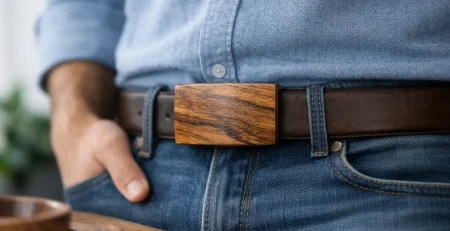
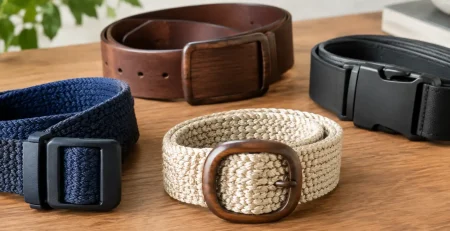
For accessories worn close to the body, material choices shape this experience. Natural leather can develop a rich patina and be maintained over time. Reclaimed wood can turn an ordinary fastening into a tactile design feature with genuine character. Metal-free solutions can also be a welcome choice for people with sensitivities, while making airport travel a little less complicated.
A guide to modular accessory design begins with longevity
Longevity is not a vague promise printed on a label. It is the result of decisions made before production begins. The material must suit the job, the connection must tolerate repeated use, and the product must be possible to care for without specialist intervention every few months.
Designers should think about the real life of an accessory: being pulled through belt loops, dropped by the front door, packed for a holiday, worn in rain and stored in a drawer. A modular piece has more interaction points than a fixed one, so these details deserve extra attention.
Consider the likely order of wear. Straps can crease, edges can scuff, closures can lose their finish, and adjustment holes can stretch. If a component is expected to age first, make it serviceable or replaceable. If it is difficult to replace, make it exceptionally durable.
This is where craftsmanship earns its place. Precision improves fit. Thoughtful construction reduces stress on materials. A repairable design respects both the maker’s work and the customer’s investment.
Make choice feel personal, not complicated
Modularity can give people room to create their own signature look. A lighter wood tone might suit summer linen; a deeper tone can bring definition to black denim or tailoring. A narrow strap and a wider strap can change the mood of the same buckle completely.
Yet choice needs a clear edit. Offering every possible combination may sound generous, but it can make buying feel uncertain. Curated pairings help customers see what works, while a smaller family of compatible parts keeps the system coherent.
Think in wardrobes rather than individual products. Which components carry a wearer through work, evenings and weekends? Which changes offer a noticeably different look? A modular collection should reward repeat wear, not encourage accumulation for its own sake.
At Wood Belt, this principle is especially meaningful: an iconic wooden buckle can remain the recognisable centrepiece while compatible straps allow the wearer to shift colour, texture and occasion with confidence. The result is personal style with less pressure to buy anew.
Design for repair before replacement
Repair is often treated as an afterthought, offered only when something has already failed. A better approach builds repair into the product story from day one. Customers should understand which parts can be refreshed, how to care for them and when a repair is wiser than a replacement.
That does not mean every repair is simple. Some structural work belongs with skilled craftspeople. But everyday care should feel approachable: keeping leather conditioned, drying it naturally after rain, storing accessories away from harsh heat and checking moving parts before damage grows.
Clear design helps here. If the wearer can see how a component is attached, they are more likely to understand its value and treat it carefully. Hidden complexity may look neat at first, but it can turn a small fault into a permanently unusable product.
There is a commercial benefit as well as an ethical one. A customer who can renew a favourite accessory is not being sold a compromise. They are being offered continued use, continued enjoyment and a more considered reason to return.
The trade-off worth getting right
No accessory needs to be modular simply because it can be. A fixed construction may be lighter, cleaner or more appropriate for a particular form. A detachable element can introduce extra weight or visual bulk. Premium materials and precise fittings may also cost more upfront.
Those trade-offs are worth making only when modularity creates real value: a better fit, a longer life, easier repair or meaningful styling freedom. The goal is never more mechanisms. It is more possibility from less.
That is the standard to look for as a customer, too. Ask whether the parts are likely to remain available, whether they are compatible across the collection, and whether the accessory would still look beautiful if you never changed a single component. A good modular design passes all three tests.
Choose accessories that invite you to wear them often, care for them well and make them your own. The most sustainable piece is not the one that asks you to sacrifice style. It is the one you would be disappointed to live without.