


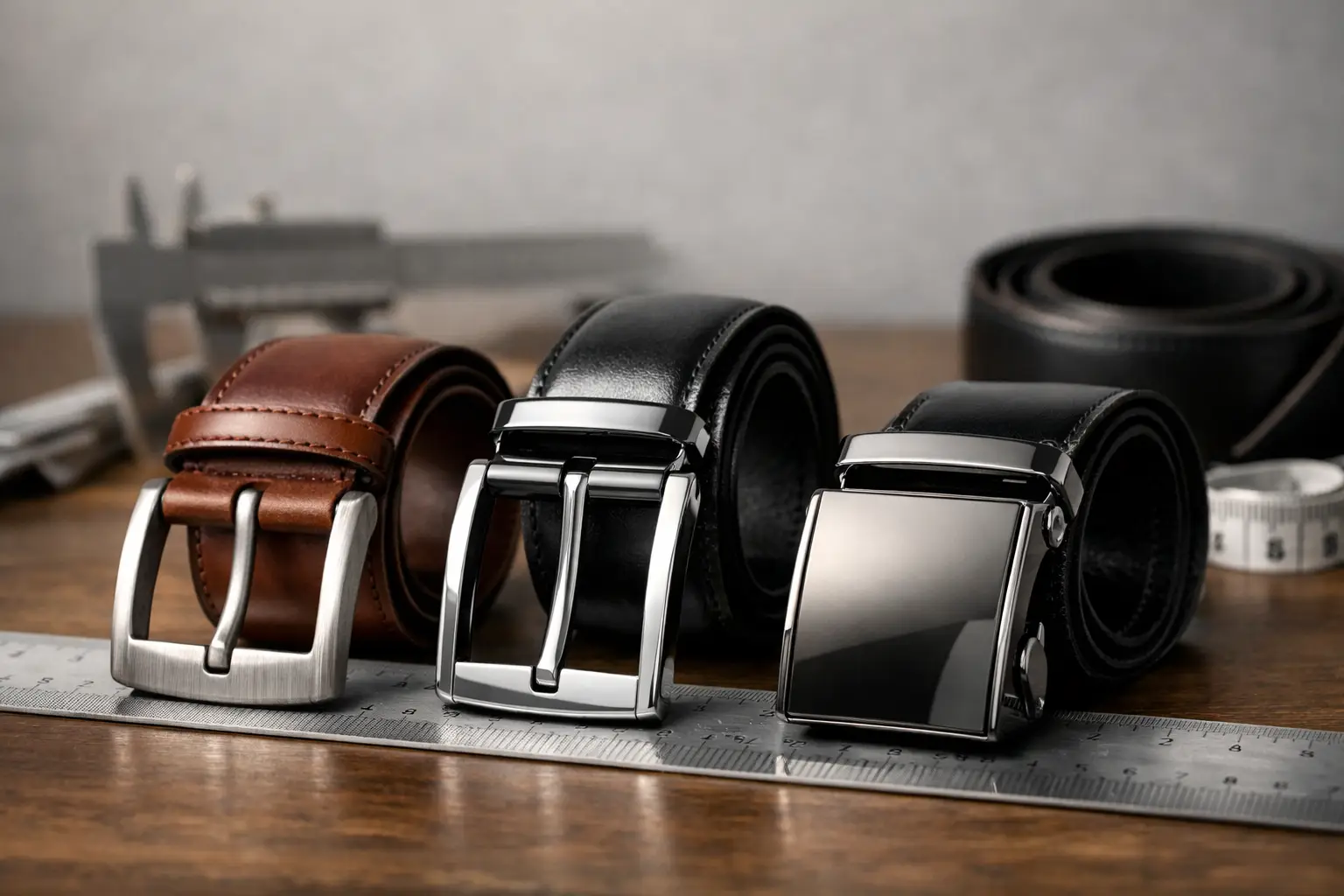
Standard Belt Buckle Size Explained
A belt can look impeccable in the photo and still disappoint the moment the buckle feels too bulky, too narrow or oddly out of proportion. That is usually where the question of standard belt buckle size starts – not in a workshop, but in front of a mirror, while getting dressed for work, dinner or a flight.
The short answer is that there is no single universal standard belt buckle size for every belt. What people usually mean by it is the buckle width that matches common belt strap widths, and the most common one is 35 mm, followed closely by 40 mm. That sounds simple enough, but the right choice depends on how you dress, how you want the belt to sit, and whether you care more about formal polish, everyday comfort or statement design.
What standard belt buckle size really means
When shoppers ask about standard belt buckle size, they are often mixing together three different measurements. The first is the strap width, which is the width of the leather or other belt material. The second is the inside width of the buckle, which must fit that strap. The third is the overall face size of the buckle, which affects how bold or discreet it looks when worn.
In practical terms, the key measurement is the strap width. Most buckles are made to fit a specific strap width, so a 35 mm buckle is designed for a 35 mm belt strap. If the fit is off by even a few millimetres, the belt may not sit neatly and the finish can feel sloppy rather than refined.
That is why “standard” is less about one magic number and more about a range that covers most wardrobes. For everyday adult belts, that range usually sits between 30 mm and 40 mm.
The most common standard belt buckle size by belt type
For dress belts, 30 mm to 35 mm is the usual territory. These buckles are slimmer, cleaner and better suited to tailoring, office wear and smarter occasions. They sit neatly with suit trousers and chinos without drawing too much attention.
For casual belts, 38 mm to 40 mm is often the standard belt buckle size people recognise. This width feels balanced with denim, heavier cotton trousers and relaxed everyday outfits. It has more presence, but still reads as versatile rather than oversized.
For fashion belts or utility-inspired styles, you may see 45 mm and above. At that point, the buckle becomes a stronger visual feature. That can look excellent with the right outfit, but it is not the everyday default for most people.
So if you want the safest all-round answer, 35 mm is the closest thing to a classic standard. If your wardrobe leans more casual, 40 mm is just as common and often more useful.
A quick reality check on proportions
The best buckle size is not only about the belt. It is also about the scale of your outfit. A narrow buckle with heavy selvedge denim can look a bit timid. A large buckle with fine tailoring can feel clumsy. Good style is often about proportion, and belts are no exception.
This matters even more if you prefer accessories with distinctive materials or design details. A buckle with visual character does not need excessive size to make an impression. In many cases, considered craftsmanship carries more impact than sheer bulk.
How to choose the right belt buckle width
Start with your wardrobe, not the measuring tape. If you mostly wear suits, tailored trousers or smarter separates, stay close to 30 mm or 35 mm. These sizes look elegant and are easy to pair with polished shoes and cleaner silhouettes.
If you live in jeans, overshirts and knitwear, 38 mm or 40 mm will probably serve you better. It feels more grounded and substantial, which suits casual dressing. It also tends to be more forgiving for day-to-day wear, where comfort matters as much as appearance.
Then think about your build and your styling preference. A taller frame or chunkier footwear can usually carry a wider buckle with ease. If your style is minimal, a slimmer buckle often feels sharper. If you enjoy statement accessories, you might intentionally go wider, though there is always a line between distinctive and overdone.
Comfort matters more than most people expect
Buckle size affects comfort in subtle ways. A very large buckle can press awkwardly when you sit, especially if you spend long hours at a desk or travel frequently. Heavier metal buckles can also feel cold, rigid and intrusive against the body.
That is one reason modern buckle design has moved beyond simple tradition. A well-made buckle should secure the belt cleanly without becoming the part you are most eager to take off. Style should never come at the expense of wearability.
Standard belt buckle size and interchangeability
If you own interchangeable belts, size becomes even more important. A buckle and strap system only works well when the widths are correctly matched. A 40 mm strap needs a 40 mm-compatible buckle. Close is not close enough if you want the belt to look finished.
This is where buyers sometimes get caught out. They see a buckle described as standard, assume it fits everything, and end up with gaps, rubbing or an attachment that feels improvised. In premium accessories, precision is part of the appeal. The fit should feel intentional.
If you are buying a belt as a gift, 35 mm is usually the safest midpoint if you are unsure of the recipient’s style. It is widely wearable, neither too dressy nor too rugged, and tends to suit a broad range of outfits.
Why material changes how buckle size feels
Two buckles can share the same measurement and still feel completely different. Material changes the visual weight, the literal weight and the personality of the piece.
A polished metal buckle in 40 mm can feel more formal or more assertive, depending on the finish. A matte or textured buckle often reads more casual. A wooden buckle, by contrast, brings warmth and distinction without the harshness that metal can sometimes introduce. It can also feel lighter and more comfortable in daily wear, which matters if you want a belt that works from morning meetings to evening plans.
That difference is not only aesthetic. For some people, material choice solves practical problems. Metal sensitivity is real, and frequent travellers know that traditional buckles are not always the easiest companion. In that context, size still matters, but material can matter just as much.
When standard is the right choice, and when it is not
There is a reason standard sizes endure. They work. A 35 mm or 40 mm buckle fits naturally into most wardrobes, feels familiar and is easy to style across seasons. If you want one belt that earns its place through constant wear, staying near the standard range is usually the smartest move.
But standard is not always the most stylish answer. If your wardrobe is highly tailored, going narrower can look more refined. If your style leans creative, architectural or outdoors-inspired, a wider buckle may suit you better. The best accessories do not just fit your waist. They fit your life.
This is where thoughtful design makes a difference. A belt can respect classic proportions while still offering something original in form, material and purpose. That balance is exactly why brands such as Wood Belt have found a place with people who want more than another generic accessory. The belt still needs to work with everyday sizing standards, but it can do so with far more character, comfort and conscience.
How to measure before you buy
If you already own a belt you like, measuring it is the easiest route. Lay the strap flat and measure its width straight across. That number tells you the buckle size you need to match.
If you are buying from scratch, check whether the product description refers to strap width or overall buckle dimensions. Brands do not always label these the same way. A buckle might be described as large because of its visible front, while still being made for a standard 35 mm strap.
If you are between styles, think about use rather than theory. One excellent casual belt in 40 mm and one smarter belt in 35 mm will usually do more for a wardrobe than chasing a single do-everything option that never looks quite right.
A good belt should feel like part of your outfit, not an afterthought and not a compromise. Standard sizing gives you a reliable starting point. The real win is choosing a buckle that matches your proportions, your routine and your values – because the pieces you wear most should look good, feel good and do some good too.


