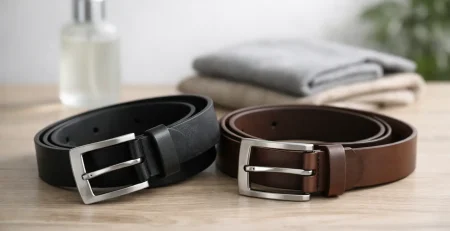
Nickel-Free Versus Stainless Buckles Compared
A belt buckle sits close to the body, works hard every day and often makes the whole look. Yet the material behind that small detail can decide whether a belt feels effortless or irritating, ordinary or unmistakably yours. When considering nickel-free versus stainless buckles, the right answer is not simply about what looks polished on the shelf. It is about skin comfort, long-term wear, travel habits and the kind of material story you want to wear.
For some people, a stainless steel buckle is a familiar, dependable choice. For others, even a brief brush with nickel can leave the skin sore, itchy or inflamed. And for anyone seeking a belt that makes a quieter impact on the planet without disappearing into the background, a metal-free buckle opens a different design conversation altogether.
Nickel-free versus stainless buckles: the real difference
The comparison can be confusing because stainless steel is not one single material. Most common stainless steel alloys contain some nickel. Nickel helps give steel its corrosion resistance, strength and bright finish, but it can also be a problem for people with nickel sensitivity.
A nickel-free buckle, by contrast, is made without nickel in the material that touches the wearer. That may mean a different metal alloy, a coated component, or no metal at all. Those distinctions matter. A buckle described as nickel-free is not automatically metal-free, plastic-free or lower impact. It simply tells you that nickel is absent from the relevant material or construction.
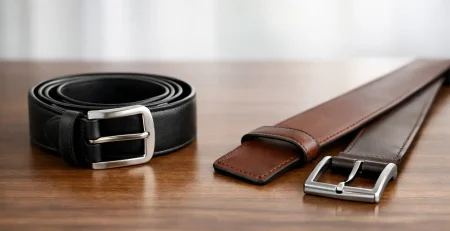
Stainless buckles earn their reputation for a reason. Good-quality stainless steel resists moisture, keeps its shape and handles years of opening, closing and pulling. It suits belts intended for hard wear, especially where a crisp, classic metal finish is part of the brief. But stainless is not automatically the best option for every skin, wardrobe or lifestyle.
The most useful question is not, “Which material wins?” It is, “What do I need my belt to do?”
If your skin reacts, look beyond the label
Nickel allergy is one of the most common causes of contact dermatitis. A belt buckle can be a frequent trigger because it may rest against bare skin, particularly in warmer weather or when a shirt shifts throughout the day. Sweat and friction can make a reaction more likely.
Symptoms vary. Some people notice a faint red patch after repeated wear. Others experience itching, dryness, tenderness or small blisters. If the irritation appears exactly where the buckle touches, nickel may be involved, though a clinician can help confirm the cause.
Stainless steel can be tolerated by many people with mild sensitivity, particularly when the buckle is well finished and not in direct skin contact. Yet “stainless” does not mean “nickel-free”. Lower-grade steel, scratches, wear at the edges and prolonged contact can all change the experience. A buckle plated with a nickel-free coating can also be less reassuring once that coating becomes damaged.
For a known nickel allergy, the clearest route is a genuinely nickel-free buckle with transparent material information. A completely metal-free design goes further, removing the uncertainty of hidden alloys, plating and exposed hardware. It is not a compromise in style. Done well, it becomes the feature people notice first.
Strength matters, but so does thoughtful construction
Metal buckles have traditionally been associated with strength, and that association is understandable. Steel is hard, familiar and reassuringly substantial. For demanding workwear, very heavy leather or situations where a belt may take exceptional force, a quality steel buckle can be a sensible choice.
But material strength is only one part of belt performance. The design of the closure, the thickness and quality of the strap, how the components meet, and whether individual parts can be repaired all influence how a belt performs over time. A poorly made steel buckle does not become a lifelong item simply because it is steel.
Wood offers a compelling alternative when it is engineered with purpose rather than treated as decoration. A well-designed wooden buckle can be light, smooth and remarkably comfortable, while bringing natural grain and character that no mass-produced metal finish can copy. Each piece carries subtle variation from the material itself – an honest signature, not a flaw.
At Wood Belt, the patented wooden buckle is designed to make that difference visible. It replaces the expected metal hardware with a sculptural, natural focal point, pairing confident style with a practical metal-free construction.
The travel question: less metal, fewer worries
Frequent travellers often look for belts that are easier to wear through airport security. A buckle with no metal can reduce the chance that your belt becomes the item you have to remove or explain at the checkpoint. It can make getting dressed for an early flight feel that little bit simpler.
Still, it is wise not to treat any buckle as a guaranteed fast track through security. Screening rules, scanner sensitivity and staff procedures vary by airport and can change. Other metal items on your person may also be detected.
The practical benefit is ease, not a promise. A metal-free buckle gives you one less piece of hardware to think about, whether you are moving through a terminal, packing light for a city break or stepping from the plane straight into a meeting.
Style is where the materials tell different stories
A stainless buckle tends to signal convention. Silver-toned steel is versatile, clean and easy to match with watches, rings and other hardware. Black-coated or brushed steel can feel more contemporary, while polished finishes lean formal. If your wardrobe is built around familiar tailoring codes, stainless gives you a reliable visual language.
Nickel-free alternatives offer more range than many people expect. Some retain a refined metallic appearance; others deliberately move away from it. A wooden buckle changes the silhouette and mood of a belt. It feels warmer against linen, denim, wool and vegetable-tanned leather, and it creates contrast against the uniform shine of zips, jewellery and mobile phone screens.
That distinction is valuable if you dress with intention. The best accessories do not merely coordinate. They make an outfit feel personal. A natural buckle can be understated with a white shirt and tailored trousers, then become a conversation piece with relaxed knitwear or a bold summer dress.
The sustainability trade-off deserves an honest look
Neither stainless steel nor a nickel-free material is sustainable by default. The impact depends on extraction, energy use, manufacturing, transport, durability and what happens at the end of the item’s life.
Stainless steel is durable and recyclable, both meaningful advantages. A buckle that remains functional for decades is preferable to one that needs replacing after a season. However, producing virgin metal is energy-intensive, and recycling only helps when components are recovered and processed through the right systems.
A natural, metal-free buckle can offer a different route. When made from reclaimed wood offcuts, it puts an existing material to work rather than demanding a freshly mined resource. Wood also brings a lower-tech, tactile quality that fits accessories designed to be kept, repaired and appreciated.
The detail to examine is the full product, not the headline claim. Ask whether the strap is made to last, whether the buckle can be maintained, whether parts are replaceable and whether the design will still feel worth wearing several years from now. The most sustainable belt is not the one with the loudest claim. It is the one that earns a long life in your wardrobe.
Which buckle should you choose?
Choose stainless steel when you want traditional hardware, need high resistance to hard daily use, and have no concern about nickel contact. It remains a practical material, particularly for classic belts and demanding applications.
Choose nickel-free construction when skin sensitivity is part of the picture or when you want greater certainty about what rests against your body. Check what “nickel-free” means for that specific product: solid material, coating, or a fully metal-free design.
Choose a wooden buckle when you want to move beyond the standard metal-belt formula. It suits people who value a lighter feel, distinctive design, natural materials and an accessory that makes sustainability visible without looking worthy or predictable.
Your belt is a small daily choice, but it sits at the centre of how you move, dress and feel. Choose the buckle that lets you forget discomfort, keep your personal style intact and wear something with a story worth carrying.