


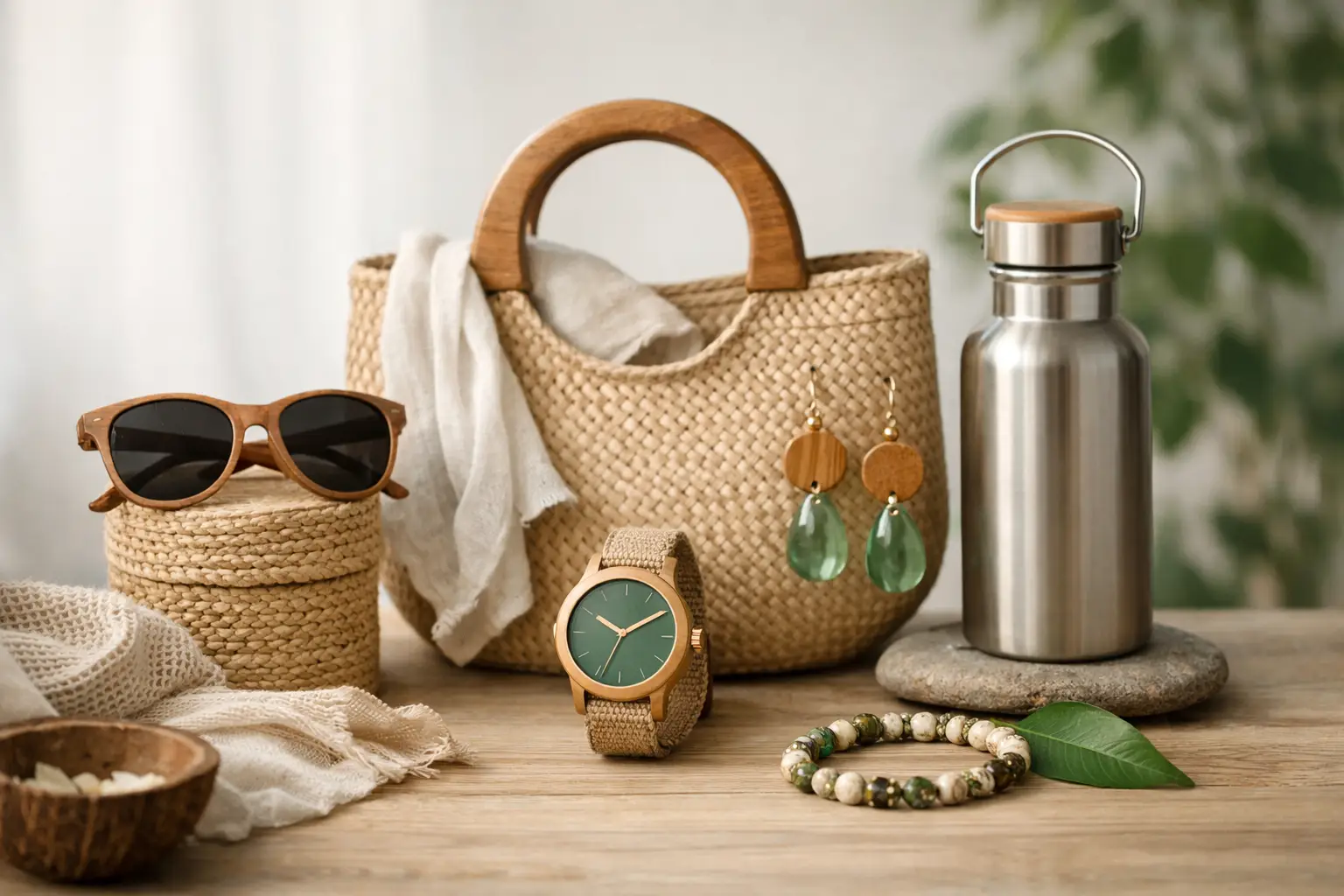
Sustainable Accessory Trends 2026
Next year’s best accessories will not win on hype alone. They will need to earn their place on the body and in the wardrobe. Sustainable accessory trends 2026 are pointing clearly in one direction – fewer throwaway extras, more purposeful pieces with design presence, practical value and materials that make sense.
That shift matters because accessories have often been treated as fashion’s easy add-on: small purchase, quick thrill, low commitment. The problem is that low commitment usually means short life, weak materials and very little thought for what happens after the item wears out. In 2026, that attitude looks dated. The modern customer wants more from the finishing touch.
At the premium end of the market especially, we are seeing a sharper definition of value. People still want beauty. They still want originality. But they also want proof that the product was designed to last, made with care and able to justify its footprint. Style is still the hook. Substance is what closes the sale.
What sustainable accessory trends 2026 really signal
The phrase gets used broadly, but the strongest sustainable accessory trends 2026 are not about a single material or aesthetic. They reflect a more mature way of buying. Consumers are asking harder questions: Will this age well? Can it be repaired? Does it feel distinctive enough to wear for years? Is the sustainability story visible in the product itself, or only in the marketing?
That last point is crucial. The accessories gaining momentum are the ones where the environmental thinking is built into the design language. You can often see it in the grain of natural material, the absence of unnecessary hardware, the modular construction or the honest finish that improves with wear. Sustainability is becoming less about adding green claims and more about removing wasteful habits.
This is also where luxury is changing shape. Old luxury often leaned on excess – more coatings, more packaging, more trend turnover. New luxury leans into restraint, craft and permanence. A well-made belt, bag or wallet that solves a real problem and keeps looking better over time feels far more modern than something flashy but forgettable.
Natural materials with a stronger design point of view
Natural materials are not new, but in 2026 they look more refined and less rustic. That distinction matters. Buyers do not want eco products that feel like a compromise. They want elevated design with texture, character and polish.
Wood, vegetable-tanned leather, organic cotton, cork, raffia and other plant-based or lower-impact materials are moving beyond the niche category when they are used with intention. The winning products are not trying to imitate plastic or heavily processed luxury materials. They are celebrating what makes the raw material special – grain, warmth, softness, tonal variation and tactility.
There is a trade-off here, of course. Natural materials can mark, shift in colour and develop signs of wear. For the right customer, that is not a flaw. It is proof of life. Patina has become desirable again because it signals ownership, memory and longevity. Accessories that age gracefully are becoming more attractive than those that stay artificially identical until they suddenly fail.
Repairability becomes part of desirability
One of the clearest sustainable accessory trends 2026 is repairable design. For years, repair was treated as an afterthought. Now it is increasingly part of the product promise.
This does not mean every customer will mend their own accessories at home. It means they want to know the item was built with a longer future in mind. Replaceable straps, modular parts, simpler construction and durable fastening systems all make a difference. So does a brand’s willingness to support the product after purchase.
Repairability also changes the emotional relationship people have with accessories. A piece worth maintaining is a piece worth choosing carefully in the first place. That slows down impulse buying and encourages people to invest in something with stronger design identity. It is a far better model than buying three weak alternatives and treating them as disposable.
Fewer metals, fewer irritants, smarter function
Sustainability is not only about the planet. It is also about daily usability. Accessories that reduce irritation, improve comfort and solve practical frustrations are gaining ground because they stay in use longer.
That is why low-metal and metal-free concepts feel especially relevant. For some people, they reduce sensitivity issues. For frequent flyers, they can simplify travelling. For others, they simply create a cleaner, lighter silhouette. When function and sustainability meet, the result is not preachy. It is genuinely useful.
This is where innovation matters. Customers are increasingly drawn to products that do something different without looking gimmicky. A smart fastening system, a patented detail or a material choice that improves comfort can make an accessory feel future-facing. If it also lowers impact, all the better. The key is that the product must first feel desirable.
Smaller collections, stronger signatures
Another shift for 2026 is away from endless choice. The most compelling accessory brands are editing more tightly and designing more deliberately. Instead of flooding the market with near-identical options, they are building recognisable signatures.
For customers, that makes shopping easier. It also builds trust. A focused collection suggests confidence in the product, not a scramble to chase every passing micro-trend. Signature accessories often perform better sustainably because they are designed to stay relevant across seasons, not just for a brief social-media cycle.
This does not mean fashion loses its edge. Quite the opposite. A strong signature can be far more stylish than trend-chasing. A distinctive buckle, a sculptural shape, an intelligent finish or a memorable proportion gives an accessory staying power. People remember it. More importantly, they keep wearing it.
Visible provenance will matter more than vague promises
Consumers are getting better at spotting soft sustainability language. By 2026, vague claims will feel even weaker. People want specifics they can understand.
They want to know whether materials are reclaimed, biodegradable, compostable or vegetable-tanned. They want clarity on how products are made and why those choices matter. They are more likely to trust brands that explain the design logic plainly rather than wrapping it in corporate jargon.
The strongest stories are tangible. Offcuts given a second life. Components designed for replacement rather than disposal. Craft methods that use less energy or less synthetic input. Social impact that is tied to real partnerships rather than abstract positioning. When customers can see the reasoning, they are far more likely to believe it.
Gifting with meaning keeps growing
Accessories sit in a powerful gifting category because they balance practicality and emotion. In 2026, gift buyers will continue moving towards pieces that feel personal, lasting and ethically credible.
That changes what counts as a good gift. Novelty is losing ground to thoughtfulness. A premium accessory made from natural materials, with a distinctive design story and everyday usefulness, lands differently from something generic. It says you noticed the person’s style. It says you care about quality. It says the gift was chosen, not just bought.
This is especially relevant for belts, bags and smaller leather goods, where fit, finish and longevity can turn a simple object into an everyday favourite. The best gifts are often the ones people would not have found for themselves but end up using constantly.
How to read the trend without overbuying
The smartest response to sustainable accessory trends 2026 is not to buy more sustainable things. It is to buy better things, less often.
That means paying attention to design permanence. Ask whether the accessory has enough character to feel special now and enough restraint to still work in three years. Look at the materials honestly. Natural and lower-impact options are promising, but only if they are paired with strong construction and everyday practicality.
It also helps to think about your own habits. If you travel often, comfort and ease matter. If you wear the same few outfits on repeat, a distinctive accessory can do more work than a trendy one. If you prefer building a wardrobe slowly, invest in pieces with visible craft and repair potential. Sustainability works best when it matches real life.
For brands, the message is equally clear. The future belongs to accessories that feel iconic rather than excessive, intelligent rather than overengineered, and durable rather than merely marketable. Customers are ready for products that look good, feel good and do measurable good without asking them to sacrifice style.
That is the opportunity ahead. Not more stuff, dressed up in greener language, but accessories people genuinely want to keep close for years. Choose the pieces that make everyday dressing feel sharper, easier and more considered, and the trend takes care of itself.


