Are Buckles Durable? What Determines Their Life
A belt can be cut from beautiful leather, finished with care and styled for years of wear – but its future often comes down to the small component at the front. Are buckles durable? The honest answer is that they can be exceptionally durable, but material alone never tells the full story. Shape, construction, daily habits and the ability to repair or replace parts all decide whether a buckle becomes a lasting companion or a weak point.
For anyone choosing accessories with intention, durability is not simply about surviving a few seasons. It is about wearing something often, loving its character as it ages and knowing it was designed for a longer life than the latest trend.
Are Buckles Durable Enough for Everyday Wear?
A well-made buckle should cope comfortably with normal daily use: fastening and unfastening, sitting, walking, commuting and travelling. Yet belts live a surprisingly active life. They are pulled tight, flexed around the waist, caught on furniture, packed into suitcases and exposed to moisture, body oils and changes in temperature.
The buckle experiences concentrated force every time you adjust the belt. A weak mechanism can bend, crack, loosen or scrape the belt strap over time. A considered buckle distributes that force through its shape and through the way it connects with the belt.
This is why a buckle’s durability is less about looking heavy and more about being intelligently engineered. An oversized metal buckle may feel substantial, for example, but it can still fail if its pin is thin, its coating chips or its moving parts are poorly assembled. Equally, a carefully designed wooden buckle can offer impressive everyday performance when the wood is properly selected, shaped and finished for its purpose.
Material Matters, But Design Matters More
Every buckle material comes with its own strengths and compromises. The right choice depends on how you dress, how you live and what you expect from your belt.
Metal buckles
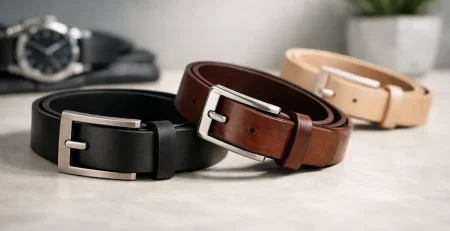
Metal is familiar for good reason. Solid brass, stainless steel and quality alloys can withstand years of use, particularly when they are thick enough and well finished. They suit people who prefer a traditional buckle mechanism and a more conventional appearance.
But metal has trade-offs. Plated finishes may scratch or wear away, exposing a different-coloured metal underneath. Some lower-grade alloys can tarnish, corrode or trigger skin sensitivity. Metal buckles also add weight and can become an inconvenience at airport security, especially for frequent flyers who would rather not remove a belt at every checkpoint.
Plastic buckles
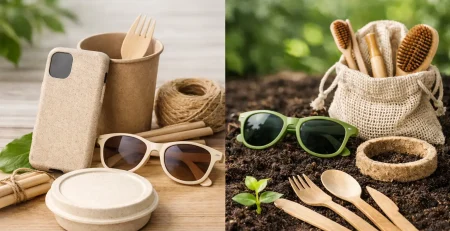
Plastic can be light, affordable and useful for certain technical applications. A good engineering plastic performs well in the right setting, particularly where low weight matters.
For a premium everyday belt, however, plastic can feel less timeless. It may become brittle after prolonged exposure to heat or sunlight, and thin components can crack under sudden force. Its durability varies widely, making material quality and design especially significant.
Wooden buckles
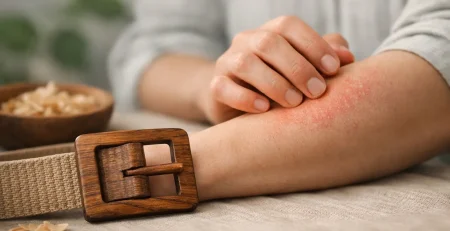
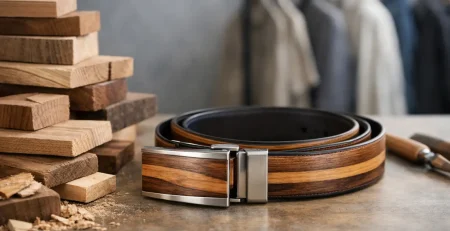
Wood has an immediate visual warmth that metal and plastic cannot replicate. It is also a natural, renewable material with a distinctive grain, meaning no two pieces look exactly alike. That individuality is part of the appeal.
The outdated assumption is that wood must be delicate. In reality, wood has been used in demanding objects for centuries because the right species, grain direction and finish can create a strong, stable component. Still, it should not be treated like indestructible hardware. Repeated soaking, harsh chemicals and severe impact can damage it, just as they can damage leather or metal finishes.
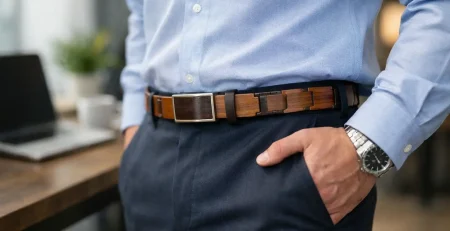
At Wood Belt, patented wooden buckles are designed as a considered alternative to conventional metal hardware, using reclaimed wood offcuts to turn overlooked material into a signature design feature. The result is light to wear, naturally distinctive and free from metal against the body – a meaningful benefit for people with metal sensitivities.
The Details That Make a Buckle Last
When assessing whether a buckle will earn a place in your wardrobe for years, look beyond the headline material. Small design decisions create the difference between a belt that merely looks good and one that keeps working.
First, consider the stress points. On a traditional buckle, the pin, frame and strap attachment take the most pressure. These elements should be proportioned properly, with no visibly flimsy pieces or sharp edges that will chew through the belt strap. On alternative fastening systems, the contact surfaces should be smooth and shaped to hold securely without crushing or abrading the material.
Next, inspect the finish. A smooth surface is not only pleasant to touch. It reduces unnecessary friction, which protects both the buckle and the belt. For wooden buckles, a quality protective finish helps manage everyday contact with moisture while allowing the natural material to remain part of the experience.
Finally, think about modularity. A buckle that can be separated from its strap has a practical advantage. If one element eventually needs attention, you may not need to discard the entire belt. That is a more intelligent version of luxury: less waste, more possibility, and an accessory built around continued use rather than premature replacement.
Durability Is Also About How a Belt Ages
The most desirable accessories rarely look factory-new forever. Vegetable-tanned leather develops a deeper tone and a personal patina. Wood may gain subtle signs of wear that make its grain feel even more individual. These changes are not the same as failure.
A durable buckle holds its structure and function while acquiring the quiet evidence of a life well lived. Minor surface marks can be part of that story. Splits, warping, loose fittings or a fastening that no longer holds are different – those are signals that a repair or replacement may be needed.
This distinction matters because fast fashion has trained many of us to expect accessories either to look perfect or be thrown away. A better relationship with design makes room for care, maintenance and patina. It asks a more useful question than, “Will this stay untouched?” Ask instead, “Will this still work beautifully, and still feel like mine, after years of real wear?”
How to Help Your Buckle Last Longer
Good care is refreshingly uncomplicated. Avoid leaving your belt on a radiator, in a hot car or in direct sunlight for extended periods. Heat can dry leather, affect finishes and place unnecessary stress on natural materials.
If the buckle gets wet, gently dry it with a soft cloth and allow the belt to air dry naturally. Do not use a hairdryer or place it near direct heat. Keep perfumes, alcohol-based sprays and household cleaning products away from both buckle and strap, as they can dull finishes or dry out leather.
When taking off your belt, unfasten it rather than pulling the strap through by force. This small habit reduces friction at the fastening point. For storage, hang the belt loosely or coil it gently in a drawer. Avoid tight folds that can distort the strap and place the buckle under pressure.
If you own more than one belt, rotating them is sensible. It gives leather time to rest and lets you choose the right piece for the occasion: a refined belt for the office, a relaxed belt for weekends, and a travel-friendly option for days spent moving through airports.
When a Buckle May Not Be the Right Choice
No accessory is ideal for every task. A delicate statement buckle may not be the best companion for heavy manual work, high-impact outdoor activities or situations where it could be repeatedly struck against hard surfaces. In those cases, purpose-built workwear or sports equipment is the wiser choice.
Likewise, a wooden buckle deserves a little more consideration around prolonged water exposure. It is made for everyday life, not for being submerged or neglected in a damp gym bag. That is not a flaw. It is simply the nature of choosing authentic materials over disposable imitation.
The same principle applies to premium leather. It rewards use, but it also rewards respect. Choosing well means understanding what an object is designed to do – and allowing it to do that beautifully.
A Better Standard Than “Will It Break?”
The strongest test of buckle durability is not whether it can survive careless treatment. It is whether it remains secure, comfortable and desirable through ordinary life, while being repairable or adaptable when needed.
Choose a buckle with purposeful materials, smooth construction and a fastening system that feels confident in the hand. Then wear it properly. The best belt is not one you save for special occasions. It is the one that becomes part of your daily uniform, carries your style without compromise and makes every year of wear feel like the right decision.