Sustainable Accessories That Earn Their Place
A belt can be the final detail that makes an outfit feel considered. It can also be the piece you replace every year because the coating cracks, the buckle irritates your skin or the design dates before the leather has even softened. Sustainable accessories begin with a better question: will this object earn a long, useful life in mine?
For style-minded people, sustainability should not mean settling for worthy-but-forgettable. The best pieces bring character, comfort and craftsmanship to your everyday wardrobe, then back those qualities with materials and production choices that make sense. Feel good. Look good. Do good.
Sustainable accessories are made for repeat wear
An accessory becomes more sustainable when it stays in use. That sounds obvious, but it is the point most often lost behind vague claims and recycled packaging. A beautifully made bag that is carried for a decade can have more value than several cheap alternatives, even if the latter arrived with a green label.
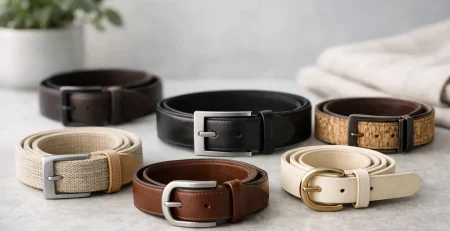
Start with the role a piece will play. Your most responsible purchase is rarely the accessory you buy for a single occasion. It is the belt that works with tailored trousers, denim and a dress; the bag that survives the weekday commute and a weekend away; the card holder that gains character rather than falling apart at its corners.
Design matters here. Timeless does not have to mean plain. A distinct silhouette, a tactile natural finish or a signature buckle can make an accessory feel personal enough to reach for repeatedly. When something expresses your style properly, it is far less likely to be pushed to the back of a drawer.
Look beyond the label
Words such as natural, eco-friendly and conscious can point in the right direction, but they do not tell the whole story. Materials, construction, lifespan and end-of-life options all deserve a closer look.
Choose materials with a story you can trace
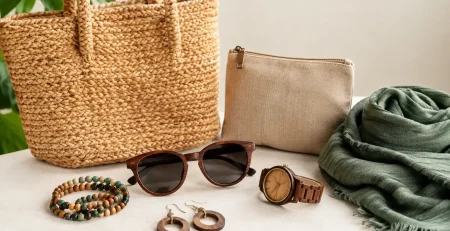
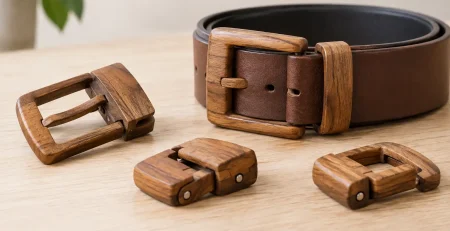
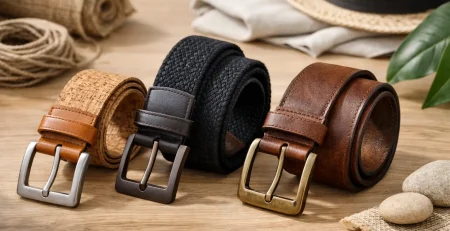
Used wood offcuts, responsibly sourced natural fibres and vegetable-tanned leather can turn existing resources into objects with genuine presence. They also make each piece feel less generic. Grain, tone and subtle variations are not flaws to conceal. They are proof that a material came from somewhere real.
Vegetable-tanned leather is a strong example of a considered trade-off. It can be durable, repairable and designed to develop a rich patina, but leather is not impact-free. Its value depends on sourcing, tanning methods, longevity and how well it is cared for. The right question is not whether a material has a perfect story. It is whether the brand can explain its choices clearly and has designed the product to last.
Be equally cautious with synthetic materials. Recycled content can be a meaningful improvement, particularly where strength and weather resistance are needed. Yet a product made from recycled plastic still needs to justify its future. Can it be repaired? Will it remain useful? Is it likely to shed fibres? Context beats slogans every time.
Examine what holds it together
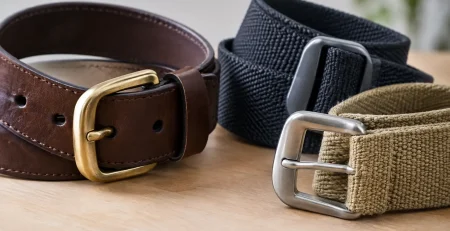
A premium accessory should not rely on a weak point hidden from view. Inspect stitching, edge finishing, hardware, closures and the parts most likely to meet friction. If a strap breaks, can it be replaced? If a buckle gets damaged, can it be repaired rather than sending the entire belt to landfill?
Modular design is one of fashion’s quieter wins. Components that can be changed or serviced help a favourite object move with you through different seasons, sizes and style shifts. It also respects the materials already invested in the product.
Comfort is not a compromise
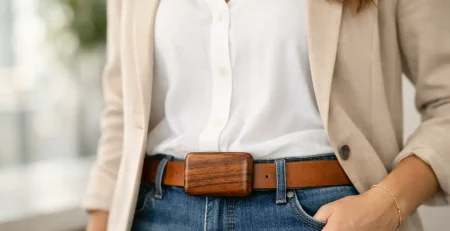
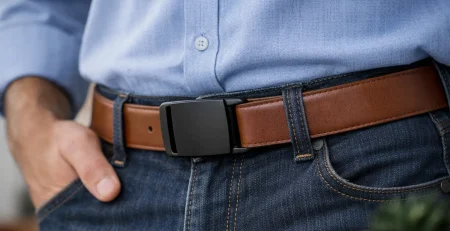
The most enduring accessories work with your body, not against it. This is particularly relevant for belts, where a metal buckle can be a daily nuisance for people with nickel sensitivity or other contact allergies. A metal-free fastening can remove that irritation while creating a far more distinctive look.
There is a practical advantage for frequent flyers, too. A belt without metal may make airport security simpler, depending on local screening procedures. It is a small detail, but good design often is. The best innovations solve an everyday problem so elegantly that you wonder why the old solution lasted so long.
Wood Belt approaches this idea through patented wooden buckles made from used wood offcuts, paired with premium, vegetable-tanned leather. The result is not sustainability as an afterthought. It is an accessory designed around natural material, visual impact and real-life wear from the outset.
Buy less, but buy with intention
Responsible style is not a test of moral purity, and it does not require replacing everything you own. In fact, keeping a perfectly usable accessory is often the better choice. The opportunity comes when you genuinely need something new, or when you are choosing a gift that should feel meaningful long after it is opened.
Before buying, pause over four practical questions:
- Can I picture wearing or using this at least once a week?
- Does the material suit how I actually live, including rain, travel and daily wear?
- Can the item be repaired, adjusted or cared for properly?
- Would I still choose it if the logo were hidden?
These questions cut through impulse buying without draining the pleasure from fashion. They also expose a useful truth: price alone does not define value. A well-made piece may cost more at the beginning, but a low cost per wear comes from longevity, not from a discount.
For gifts, intention matters even more. A distinctive belt or accessory can mark a milestone without becoming clutter. Choose something with a clear function, a personal design language and a story the recipient will enjoy telling. The goal is not to give more. It is to give better.
Care is part of the design
Sustainable choices continue after checkout. Leather benefits from being kept dry, cleaned gently and conditioned occasionally with an appropriate product. Wood should be treated with the same respect you would give a well-made piece of furniture: avoid prolonged soaking, extreme heat and unnecessary chemicals.
Store accessories where they can hold their shape. Empty bags before long periods of storage, avoid overloading straps, and do not force buckles or closures that have become stiff. Small habits extend a product’s life considerably.
Wear also tells a story. Scuffs, softened leather and a deepened wooden finish can become signs of a life well lived, not reasons to replace something. There is a difference between damage that needs repair and character that makes a piece yours.
Make your wardrobe more demanding
The fashion industry has trained us to expect endless novelty at an impossibly low price. A more satisfying approach is to expect more from every item we bring home: more beauty, more usefulness, more transparency and more years of wear.
That standard changes the way you shop. You stop seeing accessories as disposable finishing touches and start choosing objects that carry your style through ordinary mornings, important meetings, long journeys and spontaneous plans. The right piece does not ask for attention because it is loud. It earns it because it is thoughtful.
Next time you fasten a belt, pick up a bag or choose a gift, look for the detail that makes it worth keeping. That is where better fashion begins.