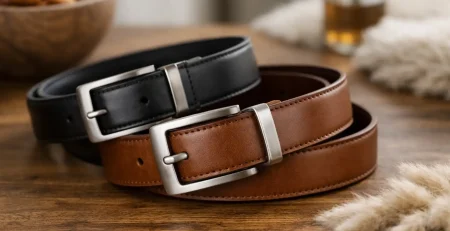
12 Upcycled Accessory Examples Worth Wearing
A great accessory should earn its place in your wardrobe. The most compelling upcycled accessory examples do more than rescue a material from waste: they turn an overlooked offcut, surplus or former object into something useful, distinctive and built to stay. That is the difference between a novelty and a piece you reach for every morning.
For style-conscious shoppers, upcycling is not about looking improvised. It is about choosing design with a past, a point of view and a longer future. Here are 12 examples that show how circular thinking can look genuinely polished.
What makes an accessory truly upcycled?
Upcycling gives an existing material a new purpose without breaking it down into raw fibres or components first. A discarded leather offcut becomes a card holder. A section of used timber becomes a sculptural buckle. The material is retained, reworked and elevated.
That distinction matters. Recycling can be valuable, but it often requires energy-intensive processing and can reduce material quality over repeated cycles. Upcycling preserves more of what already exists. Done well, it also preserves character: grain, patina, subtle variations in colour and the small marks that prove a material has lived a life before this one.
Still, “upcycled” is not automatically a guarantee of quality. Look for thoughtful construction, materials suited to their new use and a design you would choose even without the sustainability story. The best pieces make responsible consumption feel like an upgrade, not a compromise.
12 upcycled accessory examples with real style
1. Wooden buckle belts from reclaimed offcuts
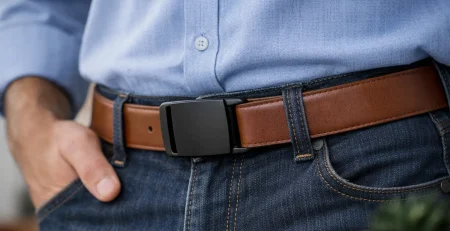
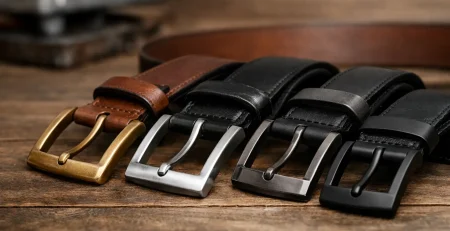
Wood offcuts from furniture making, flooring or joinery can become remarkably refined belt buckles. Each piece carries a unique grain pattern, making the buckle a focal point rather than a hidden fastening. When paired with vegetable-tanned leather, the result is warm, tactile and designed to age beautifully.
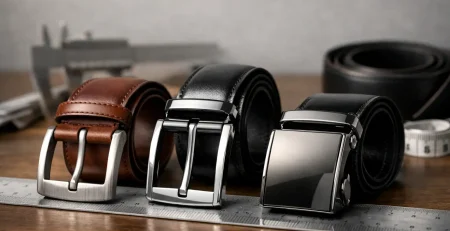
There is practical value too. A metal-free buckle can be a welcome choice for people with metal sensitivities and frequent travellers who prefer fewer metallic details in their outfit. Wood Belt has built its signature around this idea: a patented wooden buckle that makes a responsible material feel unmistakably modern.
2. Leather offcut card holders
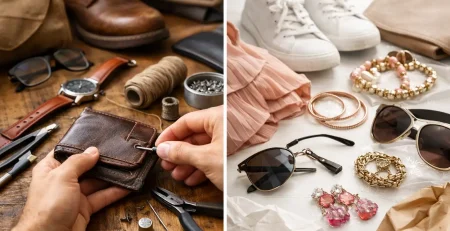
Leather production creates many smaller remnants that are too good to waste. These pieces are ideal for compact card holders, key sleeves and slim wallets, where a modest amount of material goes a long way.
The trade-off is consistency. An upcycled leather card holder may have more variation in tone or texture than one cut from a newly ordered hide. For many people, that is precisely the appeal. It feels personal from day one, then develops a richer patina with use.
3. Vintage silk scarf hair accessories
A silk scarf with a stain or a frayed edge may no longer work as a full scarf, yet there is often plenty of beautiful fabric left. Recut into scrunchies, headbands or ribbon ties, it becomes a small dose of print and colour with much less material demand.
This is one of the easiest ways to add individuality to a simple outfit. Let a patterned silk hair tie lift a neutral knit, crisp white shirt or low bun. Because the original fabric is limited, every run is naturally more distinctive.
4. Seatbelt webbing bags and straps
Retired seatbelts are extraordinarily strong, which makes them well suited to bag straps, crossbody bags and compact pouches. Their smooth woven surface brings a graphic, technical contrast to softer materials such as canvas or leather.
Good design is essential here. The finished piece should not merely look like an old car part with a zip attached. Strong stitching, considered hardware and a well-proportioned shape transform hard-wearing webbing into an accessory with city-ready polish.
5. Bicycle inner tube wallets
Punctured inner tubes are difficult to recycle through ordinary systems, but their waterproof, flexible rubber has a second life in wallets, wash bags and luggage tags. The finish can be matte, marked or slightly glossy, giving every piece a utilitarian edge.
They suit people who want an accessory that can tolerate real life. A rubber wallet is not the choice for a formal evening event, perhaps, but it is excellent for commuting, cycling and weekends away. The material asks very little and withstands a great deal.
6. Reclaimed denim tote bags
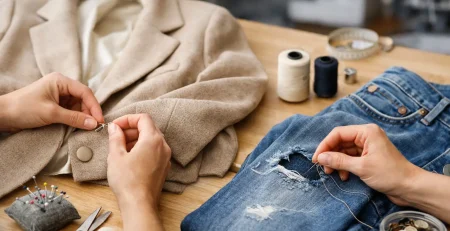
Jeans are durable, familiar and everywhere. Panels from worn denim can be pieced into tote bags, market bags or laptop sleeves, especially when the original pockets, belt loops and seams are used as design details rather than concealed.
Look closely at the construction. Denim bags need reinforced handles and a lining if they are carrying heavier essentials. A good upcycled tote should feel purposeful enough for daily use, not like a temporary craft project.
7. Tennis ball keyrings and bag charms
A spent tennis ball can become a playful keyring, charm or small pouch. The fuzzy surface and graphic curves are instantly recognisable, turning an object usually destined for the bin into a conversation piece.
This example proves that not every circular accessory has to look serious. A well-chosen charm can bring humour to an otherwise tailored bag. It also makes a memorable gift for a tennis player who already owns the usual kit.
8. Reworked jewellery from broken pieces
Single earrings, snapped chains and unwanted charms can be combined into new pendants, asymmetric earrings or layered bracelets. Jewellery is particularly suited to upcycling because small fragments can still have high visual value.
The key is restraint. Too many unrelated elements can look cluttered. A skilled maker creates a visual thread, perhaps by repeating one metal tone, stone colour or sculptural shape, so the finished piece feels intentional.
9. Billboard vinyl wash bags
Outdoor advertising vinyl is made to withstand rain, sun and wind. Once a campaign ends, that resilience can be repurposed into wash bags, pouches and document cases. The printed surfaces create bold one-off colour blocking, scratches and type fragments.
Because the source material is so tough, it is especially useful for travel accessories. Every mark is part of the object’s previous story, so perfection is not the goal. Function and personality are.
10. Coffee sack belts and small goods
Jute coffee sacks bring visible weave, printed typography and a rougher natural texture to belts, wallets and bag panels. They work best when balanced with stronger, smoother materials at stress points, such as leather tabs or reinforced cotton backing.
This is a material with presence. It may not suit someone seeking a sleek evening accessory, but it is ideal for relaxed summer dressing and gifts with a clear provenance. The original print can make an ordinary accessory feel collected rather than manufactured.
11. Climbing rope dog leads and bracelets
Retired climbing rope is colourful, exceptionally tough and available in lengths that lend themselves to dog leads, key fobs and bracelets. The material’s former purpose gives it a story of movement and trust, while its bright patterns create instant visual impact.
For wearable pieces, comfort matters. Rope bracelets should have smooth closures and proportions that do not feel bulky against the wrist. For pet accessories, secure clips and careful inspection are non-negotiable. Upcycling should never come before safety.
12. Reclaimed wood cufflinks and pins
Tiny timber remnants can become cufflinks, lapel pins or tie clips with a surprisingly luxurious finish. A polished slice of walnut, oak or maple brings natural depth to formalwear, especially when the shape is simple and the finishing precise.
These pieces work beautifully as meaningful gifts. They are compact, useful and quietly individual, offering a welcome alternative to generic metal accessories. No two grain patterns are exactly alike, which makes each pair feel considered without becoming loud.
How to choose an upcycled accessory you will keep
First, choose for your actual wardrobe, not for the story alone. If you wear mostly monochrome tailoring, a sculptural wooden buckle or reclaimed-wood cufflinks may become everyday signatures. If your life involves trains, rainy walks and packed weekends, waterproof rubber or billboard vinyl may prove more useful than delicate fabric.
Then check whether the maker has respected the material. Edges should be finished where needed, stitching should be even and load-bearing areas should be reinforced. Natural variation is a feature. Loose threads, weak fastenings and poorly aligned construction are not.
Finally, consider repairability. Can a strap, buckle, clasp or lining be repaired if it wears out? The most responsible purchase is not simply made from a rescued material. It is one that remains useful long enough to prevent the need for its replacement.
An upcycled accessory is at its best when nobody has to ask why you chose it. It simply looks right, works hard and carries a better story in every detail. Choose the piece that feels like you, wear it often and let good design do the talking.